

How to Make Cleaning Easier and Reclaim Your Weekends

If you want to make cleaning less of a soul-crushing chore, make this mental shift: stop thinking about deep cleaning and start focusing on daily maintenance. When you build small, consistent habits into your day, messes never get the chance to pile up. This sidesteps marathon scrubbing sessions and keeps your home looking good all the time.
The Secret to a Home That Stays Clean
Let's ditch the idea that a spotless home demands hours of back-breaking work every weekend. That's a recipe for burnout. The real secret is to weave tiny, manageable actions into your daily life until they become second nature. It's all about cleaning smarter, not harder, letting prevention and consistency do the heavy lifting for you.
Instead of letting dishes, dust, and clutter accumulate until they feel overwhelming, you can lean on a few core principles that will save you a ton of time and energy down the road.
Foundational Cleaning Habits
From my own experience, I've found three simple rules that have completely changed the game for me, turning what used to feel like chaos into a sense of calm with very little effort.
-
The One-Minute Rule: If a task takes less than 60 seconds, do it immediately. Wipe up a small spill, put a dish straight into the dishwasher, or hang up your coat instead of throwing it on a chair. These micro-actions add up.
-
The Clean-As-You-Go Method: This is most powerful in the kitchen. Don't wait until you have a mountain of dishes and splattered counters after a meal. Wash a few items or wipe a surface while waiting for water to boil or for something to finish in the microwave.
-
The Daily Reset: Before bed, take 10 to 15 minutes to reset the main living spaces. Put away random clutter, fluff the couch cushions, and give the kitchen counter a final wipe. This single habit stops messes from ever taking root and saves you from waking up to chaos.
When you make these small actions automatic, you’re basically cleaning without even realizing it. You’re preventing the huge, draining messes that suck up your energy and steal your precious free time.
This "little and often" approach is catching on everywhere. It's no surprise the global cleaning products market is expected to hit $497.5 billion by 2034, as noted in a market research report from Renub Research. Why? Because people are busy and they need tools that turn a 30-minute job into a 5-minute task. Things like spray mops and cordless vacuums from places like JonkeyCart are popular for a reason—they fit perfectly into this faster, more efficient way of cleaning.
Building a Cleaning Routine That Actually Works
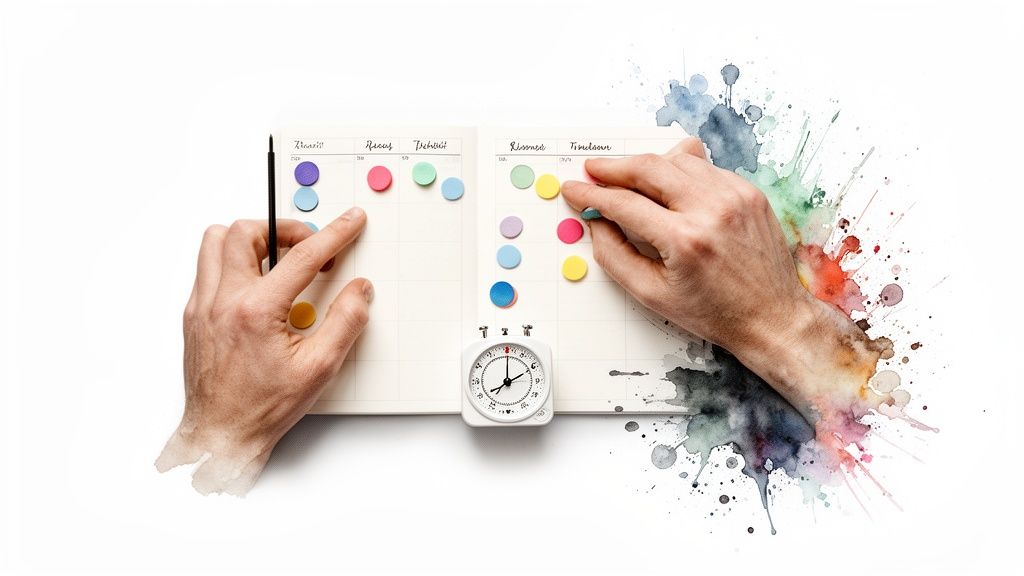
Habits are powerful, but without a good framework, they don't stick. If you truly want to make cleaning easier, you need a routine that fits your life, not some picture-perfect fantasy from a home decor magazine.
It’s time to ditch the all-or-nothing mindset that leads to exhausting, weekend-long cleaning binges. The most effective method is a tiered system that breaks down chores into daily, weekly, and monthly tasks. By spreading out the work, no single cleaning session ever feels like a monumental task.
The 15-Minute Daily Sweep
Think of your daily tasks as the bedrock of a clean home. This isn't about deep cleaning; it’s all about maintenance. Commit to a quick, 15-minute blitz through the high-traffic zones to stop messes before they take root.
Here’s what that looks like in action:
- Wipe Down Kitchen Counters: Use a spray and a cloth after dinner to keep sticky spots and crumbs from becoming permanent.
- Make Your Bed: This two-minute task instantly makes your entire bedroom feel more orderly and sets a productive tone for the day.
- Run One Load of Laundry: For families, staying on top of laundry is a game-changer. Run one load from start to finish each day to prevent the dreaded mountain from forming.
- Quick Floor Tidy-Up: Grab a cordless stick vacuum or a dry mop for a quick pass through the kitchen and entryway to catch daily dust and debris.
This daily reset maintains a baseline of clean with minimal effort. A few minutes each day genuinely saves you hours of scrubbing down the road.
The One-Hour Weekly Power Clean
This is where you dedicate a bit more time to the bigger jobs, but the key is to be strategic. Forget trying to clean the whole house in one go. Instead, pick one or two areas and give them about an hour of focused attention.
For example, dedicate Saturday morning to the bathroom and kitchen, then vacuum and dust on Sunday. Or, if your schedule is hectic, tackle the kids' rooms and main bath one day, and save your bedroom and the living room for a few days later. The point is to break it up into manageable chunks.
The goal is to rotate through your home methodically over the course of the month. You’ll find that when the daily maintenance is done, the weekly tasks become significantly faster and less demanding.
Monthly Deep Dive Tasks
Finally, we have the monthly deep-dive jobs. These are the often-forgotten tasks that make a massive difference in how clean your home feels. Since you aren't spending every weekend scrubbing floors, you'll have the bandwidth to tackle one or two of these without feeling wiped out.
Schedule these tasks one at a time:
- Wipe down baseboards and doors.
- Clean inside windows and mirrors.
- Wash the shower curtain and bath mats.
- Deep clean appliances like the oven or microwave.
By layering your cleaning this way, you create a sustainable rhythm that keeps your home consistently clean and, most importantly, gives you your weekends back. And these jobs feel a lot less like work when you have the right tools. To see some gear that can simplify these chores, check out our guide to useful gadgets for daily life that can cut your cleaning time even more.
Room-By-Room Hacks to Cut Cleaning Time in Half
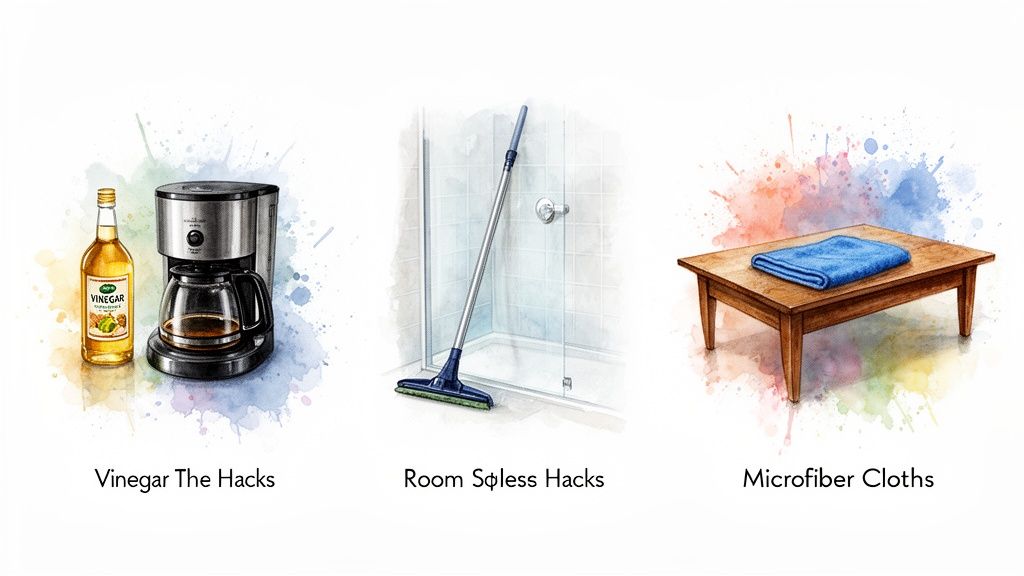
While a general cleaning routine is a great foundation, the real time-saving magic happens when you get specific. Each room has its own unique messes, and attacking them with targeted strategies is far more effective than a one-size-fits-all approach.
Think of these less as big chores and more as tiny, proactive habits. We’re talking about smart maintenance that stops messes from ever getting out of hand. Folding even a few of these simple hacks into your week can completely change the game.
Smarter Kitchen Cleaning
The kitchen is ground zero for daily messes. The only way to win is to weave cleaning directly into your cooking routine, so it never feels like a separate, overwhelming task.
Take your coffee maker, for instance. Once a month, run a cycle with equal parts water and white vinegar. It descales the machine from the inside out with zero scrubbing required from you.
Here are a few more high-impact kitchen tricks to use:
- Tackle Grease Immediately: As soon as your stovetop is cool enough to touch, give it a quick wipe with a damp microfiber cloth. Fresh grease comes off in seconds. Let it sit, and you’re signing up for a serious arm workout later.
- Use Liners Everywhere: Place liners on refrigerator shelves, in crisper drawers, and on the floor of your oven. When spills happen, just pull out the liner and replace it instead of scrubbing the whole appliance.
- The Effortless Microwave Clean: To remove caked-on food, microwave a bowl of water with a few lemon slices for two to three minutes. The steam loosens the gunk so you can wipe it away with a single swipe.
Bathroom Blitz Strategies
Bathrooms have their own special brand of grime: soap scum, mildew, and hard water stains. The secret here isn't scrubbing harder, it's preventing the buildup in the first place. A few seconds of work each day can save you from a half-hour deep clean down the road.
The single most effective thing you can do for your bathroom is to use a squeegee on the shower walls and door after every single use. This takes less than 30 seconds and gets rid of the water and soap residue that mildew loves and that creates those ugly water spots.
Another simple habit is to keep a spray bottle filled with half vinegar, half water under the sink. Give the faucet and basin a quick spritz and wipe-down each evening. It stops toothpaste and soap from hardening.
It’s no surprise that people are looking for smarter ways to handle these repetitive tasks. The global cleaning services market is on track to hit $111.49 billion by 2025, with a huge chunk of that coming from basic interior cleaning. Homeowners are getting smarter, adopting professional-grade tools like microfiber systems and ergonomic flat mops to get that pro efficiency. If you're curious about the industry, you can find some really detailed cleaning industry statistics here.
Efficient Living Area Maintenance
In living areas, the main enemies are dust and clutter. Your goal should be to manage them efficiently so your space always feels fresh without constant effort. That old feather duster you’re using is likely just pushing dust around.
Switch to a high-quality microfiber duster or cloth. The tiny fibers in microfiber create a static charge that acts like a magnet for dust, trapping and holding onto it instead of just stirring it up. You'll find yourself dusting less often with much better results.
Always work from top to bottom. Dust ceiling fans, bookshelves, and high ledges first. That way, any debris you knock loose will fall onto surfaces you haven't cleaned yet. Finish by vacuuming the floors to suck up everything that has settled. This systematic approach means you never clean the same spot twice.
Winning the War Against Clutter
Before you grab a duster, you need to address the real enemy: clutter. You can't clean what you can't reach. A disorganized space makes cleaning an uphill battle that takes twice as long.
Wiping down a countertop buried under a week's worth of mail is impossible. The same goes for vacuuming a floor that's become a minefield of shoes and toys.
Getting a handle on clutter is the most impactful thing you can do to make cleaning easier. Once everything has a place to live, tidying up shifts from a stressful game of Tetris to a simple, five-minute routine of putting things back where they belong.
The Four-Box Method for Fast Decluttering
Feeling overwhelmed by the thought of tackling an entire room? Don't. Start small. Pick one manageable zone—a chaotic kitchen drawer, a single bookshelf, or one corner of the bedroom—and focus your energy there.
To keep the process moving, use the Four-Box Method. It's straightforward and forces you to make quick decisions.
Grab four boxes or bins and label them:
- Keep: For items you genuinely use, love, and have a clear spot for.
- Donate: For anything in good shape that you no longer need.
- Trash/Recycle: For anything broken, expired, or otherwise unusable.
- Relocate: The "what is this doing in here?" box. For things that have a home, just not this one.
Go through your target area item by item, making a snap judgment and putting it into one of the four boxes. Touch each thing only once. You'll be amazed at how quickly you can reclaim a space with this focused approach.
A huge mistake people make is skipping the "Relocate" box. They'll pick up a book, walk it to the living room, then come back and get distracted. Don't do it! Collect everything that's out of place first, then put it all away in one efficient trip at the very end.
As soon as your boxes are sorted, get the trash and recycling out of the house immediately. Put the donation box straight into your car so it doesn't linger. Now for the satisfying part: finding smart, permanent homes for everything left in your "Keep" box.
Choosing Your Decluttering Style
The Four-Box Method is a great starting point, but other popular techniques might fit your personality better. Finding a system that clicks with you is crucial for long-term success.
Here's a quick look at a few well-known methods to help you find your match.
Decluttering Methods Compared
| Method | Best For | Key Principle |
|---|---|---|
| KonMari Method | People seeking a mindful, life-changing reset. | Keep only what "sparks joy." Declutter by category (e.g., all clothes), not by room. |
| Minimalism Game | Competitive people who need motivation and a fun challenge. | On day 1, get rid of 1 item. Day 2, 2 items. Day 3, 3 items, and so on for a month. |
| Swedish Death Cleaning | Practical individuals focused on not burdening others. | Gradually reduce excess possessions to make life simpler for yourself and your family later on. |
| One-In, One-Out | Anyone trying to maintain a clutter-free space. | For every new item that comes into your home, one similar item must leave. |
No matter which path you choose, the goal is the same: to be intentional about what you own. Pick a method, try it out, and don't be afraid to adapt it to your own lifestyle.
Give Everything a Home
The golden rule of an organized space is that every single item has a home. This simple principle removes all the guesswork when it's time to tidy up. You aren’t scrambling to find a place to shove something; you're just returning it to its designated spot.
This is where smart storage solutions really shine. Use clear bins in the pantry so you can see your pasta stock at a glance, or drawer dividers to transform a junk drawer into an organized hub for batteries and charging cords.
Investing in the right tools creates a system that's almost effortless to maintain. If you're looking for some inspiration, check out our guide on the best home organization products to discover solutions that will work for your space.
By putting in a little effort upfront to declutter and create these simple systems, you're paving the way for years of faster, less stressful cleaning.
The Right Tools Make All the Difference
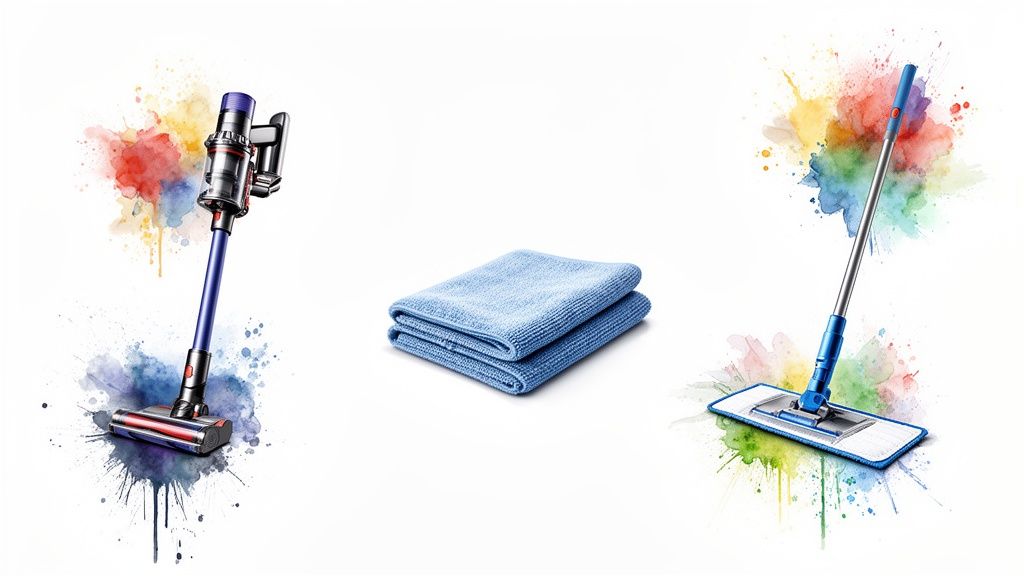
You can have the best cleaning routine in the world, but if you’re fighting against your tools, you’re going to lose. A flimsy mop that just pushes dirty water around or a vacuum that leaves behind more than it picks up can turn a quick task into a chore.
Building a small but mighty cleaning toolkit is one of the smartest shortcuts to a cleaner home. Investing in quality, multi-purpose gear saves you time, money, and elbow grease. A good cordless stick vacuum, for instance, makes daily crumb patrols a breeze, saving you from wrestling a heavy, corded machine out of the closet.
Smart Materials Work Harder for You
One of the biggest game-changers in modern cleaning is the stuff our tools are made of. Microfiber cloths are a perfect example—they are non-negotiable. Their tiny fibers create a static charge that actively grabs onto dust, grime, and bacteria instead of just smearing it around like an old cotton t-shirt would.
Think of it this way: using a cotton cloth is like trying to catch sand with a fishing net, while a microfiber cloth works like a magnet. You get a deeper clean with less effort and often without needing harsh chemical sprays.
This "work smarter, not harder" idea is the whole point behind good tool design. The goal is to let the tool do the heavy lifting so you can get better results in less time.
Why Eco-Friendly Is Also Efficiency-Friendly
This philosophy extends to cleaning solutions, too. The "green cleaning" movement isn’t just a trend; it's about making smarter, safer choices. In fact, the market for it is expected to account for around 30% of all cleaning industry revenue by 2025, which shows you how many people are making the switch. You can see the full breakdown in this global cleaning products market report.
This shift has given us amazing plant-based formulas that cut through grease and grime without the harsh fumes or toxic residues. They’re powerful, safe for homes with kids and pets, and often come in concentrated or multi-use formulas. That means less clutter under your sink and more bang for your buck.
You don't need a closet overflowing with supplies to have an effective cleaning arsenal. Start with a few key pieces that solve your biggest headaches. If you're looking for ideas, check out our guide to the best cleaning tools for your home to find some gear that will genuinely make your life easier.
Your Top Cleaning Questions, Answered
Even with a solid game plan, you're bound to run into a few tricky spots when trying to overhaul your cleaning routine. Let's tackle some of the questions I hear most often, pulling together the smart habits we've already covered.
How Can I Stay Motivated to Clean Regularly?
Motivation usually comes after you start, not before. So, don't wait to feel inspired. Just make it incredibly easy to begin.
Commit to a simple 15-minute daily reset. That's it. Put on a great playlist or a podcast you love and just start. You’re not trying to deep clean the whole house; you’re just tidying up. Another trick is task batching. Instead of thinking "I have to clean the bathrooms," just decide to wipe down all the sinks and counters. Next time, tackle the toilets. These small, focused wins feel much more manageable.
What Are the Most Essential Cleaning Tools?
You don't need a closet bursting with a million different sprays and gadgets. A simple, effective toolkit is all it takes.
If I had to narrow it down, these are the non-negotiables:
- High-quality microfiber cloths are a must. They grab dust and grime way better than paper towels or old rags.
- A good, versatile all-purpose cleaner that you can use almost anywhere.
- A simple squeegee for the shower door to stop soap scum before it even starts.
- A lightweight vacuum that actually works for your floors (whether that’s carpet, hardwood, or a mix).
- An efficient mop that doesn’t just push dirty water around.
A modern self-wringing squeeze mop can completely change the game. It saves a ton of time and back-breaking effort compared to the old bucket-and-mop routine. Beyond the basics, only buy new tools that solve a real, recurring problem you're facing.
Is It Better to Clean Room by Room or Task by Task?
While everyone has their preference, cleaning by task is almost always more efficient. It’s like setting up a little assembly line in your own home.
Think about it: when you dust every single room at once, then go back and vacuum every single room, you stay in the same mode. You're not constantly switching gears, putting supplies away, and getting new ones out. This method cuts down on wasted steps and makes the whole process feel much faster and more organized.
How Do I Deal with Clutter with Limited Storage?
When you don't have a lot of space, you're forced to be smarter about what you keep. The first, most important step is to declutter. If you don't own it, you don't have to store it.
Once you’ve pared down, it's all about maximizing what you have. Go vertical! Tall shelving units and over-the-door organizers use wall space that would otherwise be empty. Also, look for furniture that does double duty, like a storage ottoman or a bed frame with drawers underneath. And for the items you do keep, use simple drawer dividers or clear bins. Giving everything a designated home is the only way to keep clutter from taking over for good.
Ready to put these ideas into action with a better toolkit? JonkeyCart is where we find all the best problem-solving gadgets for the home. You can find everything from those game-changing mops to clever organizers that will genuinely cut down your cleaning time.
Explore the collection and find your next favorite tool at JonkeyCart.


Leave a comment