

The Best Cleaning Tools for Home: A Definitive Guide

Let's be honest: are you tired of spending half your weekend scrubbing, only to feel like your home is never quite clean enough? The problem probably isn't how hard you're working—it's the tools you're using.
Upgrading your cleaning arsenal is a game-changer, turning dreaded chores into quick, satisfying tasks. The secret is to stop thinking about a random collection of supplies and start building a smart, modern cleaning toolkit. Your goal should be to equip yourself with tools that solve specific problems, saving you time and effort.
The Modern Cleaning Philosophy: Work Smarter, Not Harder
This isn't about buying every flashy gadget. It’s about a strategic approach. A well-stocked toolkit brilliantly blends reliable manual tools for detail work with automated helpers that tackle the daily grind for you.
Think of it like this: you've got your core team for deep cleans and your automated helpers for daily maintenance. This diagram shows how to structure your toolkit for maximum efficiency.
As you can see, the modern cleaning arsenal comes down to two key categories: your manual workhorses and your smart, automated gadgets. This strategic split gives you the power and precision to conquer any mess.
The real magic happens when you combine them. Use an ergonomic scrub brush to deep-clean grout, while a robotic vacuum prevents pet hair from taking over—all without you lifting a finger.
Actionable Tip: Combine human touch with automation. Schedule your robot vacuum to run daily to handle surface debris. This allows you to focus your manual cleaning time on deep-cleaning tasks like scrubbing baseboards or polishing fixtures once a week.
This balanced approach ensures every corner of your home gets the right attention. Plus, when everything has its place, it's easier to grab what you need and get the job done. For practical ideas on getting your supplies in order, check out our guide on the best home organization products to turn your cleaning closet from chaos into calm.
Your Essential Home Cleaning Toolkit at a Glance
To make it even easier, we've broken down the must-have tools by job. Use this quick-reference table to identify exactly what you need for every area of your home, whether you prefer a hands-on approach or want to bring in smart tech.
| Cleaning Zone | Essential Manual Tool | Smart Gadget Upgrade | Actionable For... |
|---|---|---|---|
| Floors | Microfiber Mop & Bucket | Robotic Vacuum/Mop Combo | Trapping daily dust, cleaning spills, and removing pet hair. |
| Surfaces | Microfiber Cloths & Spray | Handheld Steam Cleaner | Wiping countertops, tables, and glass for a streak-free finish. |
| Bathrooms | Electric Spin Scrubber | Automatic Toilet Bowl Cleaner | Cutting through soap scum, grout lines, and tough tile grime. |
| Kitchen | High-Quality Sponge & Brush | Cordless Power Scrubber | Tackling greasy stovetops, dirty dishes, and burnt-on food. |
| Air Quality | HEPA Filter Vacuum | Smart Air Purifier | Removing allergens, dust, and odors from the air you breathe. |
With these core tools, you'll be ready for any mess. Now, let's dive into the specifics of how to use each one effectively.
Building Your Foundation with Floor and Surface Tools
Every great cleaning routine starts from the ground up. Literally. Your floors and surfaces are the largest areas in any room, and getting them right sets the tone for the entire house. The best tools for these foundational jobs aren't about brute force; they're about working smarter with gear that makes the process faster and more effective.
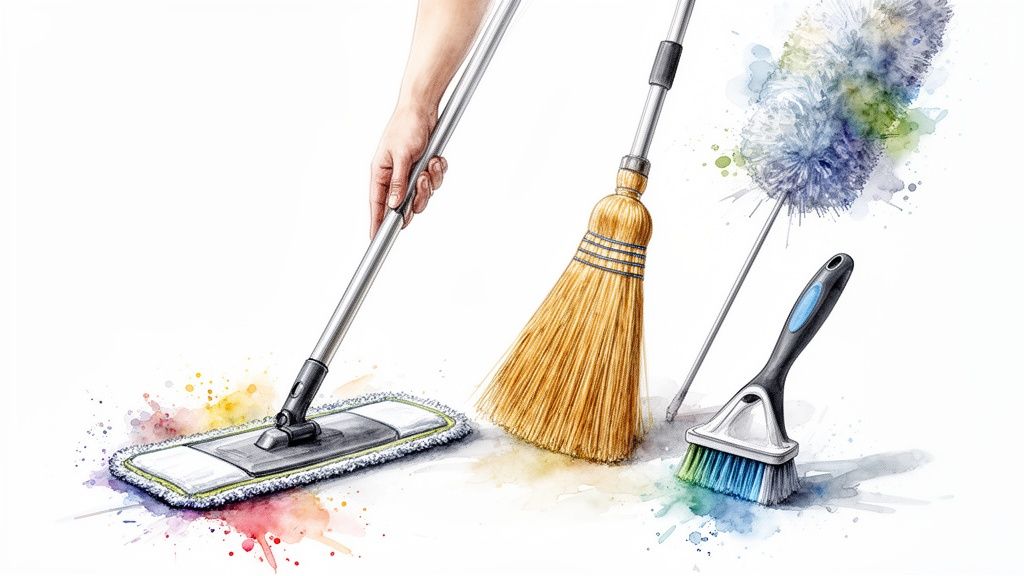
Think of these basic tools as a serious upgrade. An old, flimsy broom just shuffles dust around. But a modern microfiber mop actually traps dirt, allergens, and bacteria with minimal effort. Making that one simple switch can dramatically improve how clean your home feels, without you working any harder.
Even with all the new gadgets out there, these foundational manual tools remain the backbone of a tidy home. The global market for household cleaning tools was worth about USD 64.18 billion in 2024 and is still growing. This tells you something: people will always need effective, reliable tools that just work. As Grand View Research's analysis shows, investing in quality basics is always a smart move.
From Traditional Brooms to Modern Mops
The journey from old-school brooms to today's mops is a story of smart design. A classic corn broom is fine for sweeping up large debris in the garage, but for inside, you need something that captures fine dust instead of kicking it into the air.
This is where microfiber technology changed the game. Old cotton mops get soggy and spread dirty water. Microfiber, on the other hand, is made of tiny strands designed to physically grab and hold onto dust, pet hair, and grime. This makes them incredibly effective for both dry dusting and wet mopping.
Actionable Tip: To maximize efficiency, choose a self-wringing mop with a washable, reusable pad. This saves time, cuts down on waste, and ensures you're cleaning with a damp mop—not a soaking one—to prevent streaks and protect your floors.
Look at a smart design like the Self-Squeeze Triangular Mop. It pairs an absorbent microfiber head with a hands-free wringing system. This lets you get the mop head perfectly damp, which is crucial for protecting floors like hardwood or laminate from water damage. Plus, its triangular shape is designed to get right into the corners that regular mops always miss.
Tackling Surfaces Beyond the Floor
Of course, your cleaning foundation isn't just what's under your feet. Dust and cobwebs collect on walls, windowsills, ceiling fans, and baseboards. To tackle these areas efficiently, you need versatile, long-reach tools.
Here are the essential tools to add to your cleaning arsenal:
- Extendable Duster: A duster with a telescoping handle is one of the best cleaning tools for home use. Use it to easily reach high shelves, light fixtures, and ceiling corners without a wobbly step stool. Look for one with a bendable microfiber head to effectively clean the tops of fan blades.
- Ergonomic Scrub Brushes: For caked-on grime in grout, on tile, or around faucets, a good set of scrub brushes is non-negotiable. Choose brushes with stiff bristles and comfortable, non-slip handles to give you the leverage needed to power through soap scum without straining your wrists.
- Squeegee: For perfectly streak-free windows, mirrors, and shower doors, use a quality squeegee. Start at a top corner and pull down in one straight, steady stroke. Wipe the blade after each pass to deliver professional-level results in seconds.
Unlocking Efficiency with Vacuums and Automated Helpers
Now that your manual tools are sorted, it's time to bring in the heavy hitters. Vacuums and their automated cousins are how you win back your time, tackling deep-down dirt and daily grime with less effort. Think of these machines as an investment in efficiency, designed to handle tough jobs like ground-in dirt and endless pet hair.
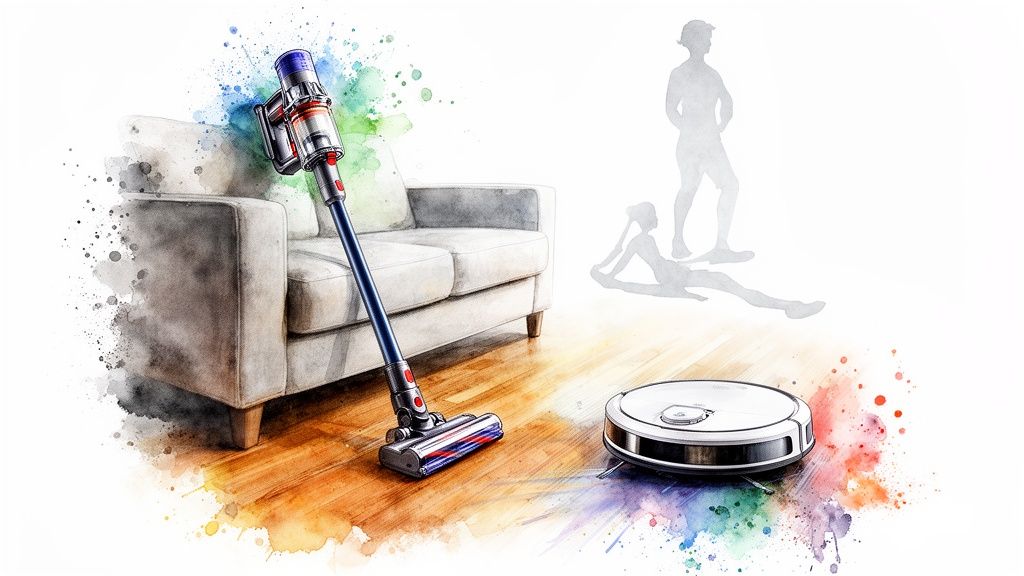
Picking the right vacuum isn't about getting the most expensive model. It's about matching the machine to your lifestyle. A lightweight, cordless stick vacuum is perfect for quick pickups in a smaller apartment. A powerful canister model is what you need for a large house with deep-pile carpet. The goal is to find a tool that makes your routine easier.
This move toward smarter cleaning tools is a huge trend. The cleaning robot market is projected to grow from USD 9.8 billion in 2022 to a staggering USD 25.9 billion by 2027. This compound annual growth rate of 21.5% shows how much people value automated help with chores.
Choosing Your Ideal Vacuum Cleaner
Don't get lost in technical specs. When shopping for a vacuum, focus on a few key features that directly impact how clean your floors get.
Here’s what you should actually look for:
- Suction Power: This is the core of any vacuum. You need strong, consistent suction to pull embedded dust, dirt, and pet dander from deep within carpet fibers. Check reviews for real-world performance on different floor types.
- Filtration System: For better air quality, a HEPA (High-Efficiency Particulate Air) filter is non-negotiable. These filters trap 99.97% of tiny particles and allergens, preventing them from being blown back into the air.
- Battery Life and Portability: If you go cordless, ensure the battery can clean your entire home on one charge. A lightweight, easy-to-carry design is also crucial for cleaning stairs, cars, and furniture without a struggle.
The Rise of Robotic Helpers
Robot vacuums have graduated from novelty to a must-have appliance. They are life-changing for busy families and pet owners, handling daily floor maintenance automatically. Newer models can map your home, dodge furniture, and even empty their own dustbins.
Actionable Tip: Think of a robotic vacuum as your daily maintenance crew. It won't replace a deep clean with your main vacuum, but it will dramatically reduce the day-to-day buildup of dust, crumbs, and pet hair. Set it to run every day for consistent upkeep.
They are masters at keeping pet hair under control. While the robot handles the floors, you still need a tool for furniture. A simple but effective Quick-Swipe Pet Hair Roller is the perfect partner. Use it to quickly clear hair off sofas, chairs, and bedding.
This two-pronged attack—automation for floors and a targeted manual tool for everything else—is the secret to a consistently clean, fur-free home.
Conquering Kitchens and Bathrooms with Specialty Tools
Let's tackle the heavy hitters: the kitchen and bathroom. These are the rooms where the real cleaning battles are won. They're ground zero for unique messes—baked-on grease, caked-on soap scum, and dreaded mildew—that everyday tools can't handle. To get these spaces sparkling, you need to bring in special forces.
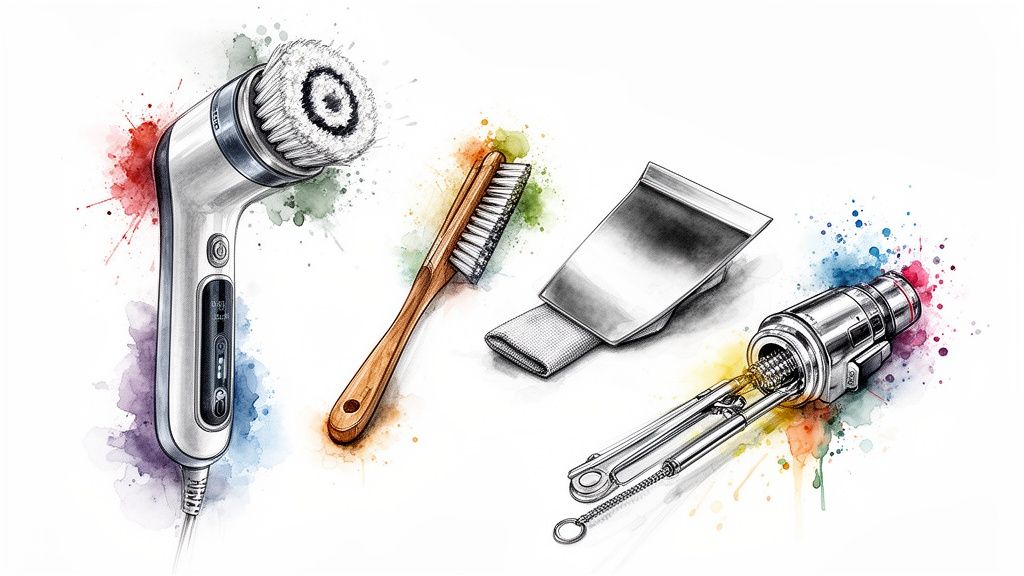
Think of it this way: you wouldn't use a butter knife to chop an onion. The same logic applies here. Arming yourself with a proper grout brush or a powerful electric scrubber isn't overkill; it’s smart. It's about turning a frustrating hour of scrubbing into a quick, satisfying task.
Your Kitchen Cleaning Secret Weapons
The kitchen is a constant battleground of grease splatters, sticky spills, and burnt-on food. A good sponge is your daily soldier, but some situations demand more firepower.
Here are the best cleaning tools for home kitchen duty:
- Grease-Cutting Scrubbers: For stovetops and backsplashes, use a non-abrasive but tough scrubber. Chainmail scrubbers are excellent for cast iron pans, while specialized pads can cut through grease without scratching surfaces.
- Drain Clog Removers: Before reaching for harsh chemicals, try a simple plastic drain snake. This inexpensive tool can physically pull out clumps of gunk and hair in seconds, clearing clogs instantly.
- Stainless Steel Polishers: To keep appliances looking sharp, use a dedicated microfiber cloth for stainless steel. It’s woven to buff away fingerprints and water spots. Wipe with the grain of the steel for a streak-free shine.
Winning the War on Bathroom Grime
Bathrooms present a different set of challenges—soap scum, hard water stains, and mildew. These messes require tools that deliver focused, intense scrubbing power without damaging your tile, glass, or fixtures.
Actionable Tip: The secret to a sparkling bathroom is using tools that do the hard work for you. An electric spin scrubber provides thousands of rotations per minute. It can do more in five minutes than you could with thirty minutes of manual scrubbing.
An electric spin scrubber is a game-changer for tubs, tiles, and shower doors. Most come with interchangeable heads, so you can blast through large areas then switch to a smaller one for tight corners. For finishing touches, a set of grout brushes is essential. Their stiff, narrow bristles dig into grout lines to scrub away mildew a normal brush can't reach. Add a squeegee for the shower glass, and you have everything you need to keep your bathroom looking brand new.
Choosing Sustainable and Eco-Friendly Cleaning Tools
A smarter, more effective way to clean can also be a greener one. When you choose sustainable tools, you're not just helping the planet; you're making a smart investment that cuts down on waste and often saves you money. It's about picking tools built to last, not to be thrown away.
The core idea is simple: buy tools you can use over and over. A high-quality microfiber mop with washable pads is a perfect example. Instead of burning through disposable sheets that end up in a landfill, you wash and reuse the same pad for months or even years. This one change significantly reduces household waste and spending.
This move toward greener cleaning is catching on. Some analysts predict eco-friendly products could soon make up around 30% of the cleaning industry's revenue. People are actively seeking reusable tools and solutions that require less water and fewer harsh chemicals. This is redefining what the best cleaning tools for home are, with washable mop heads and durable scrubbers leading the way. You can dig deeper into these trends with these cleaning product market insights.
Building Your Sustainable Cleaning Kit
Going green with your cleaning supplies doesn't mean compromising on power. Many sustainable options actually outperform their disposable counterparts. The goal is to find tools made from materials that stand up to repeated, tough use.
Here are a few easy swaps for a more sustainable cleaning routine:
- Switch to Refillable Bottles: Stop buying new plastic spray bottles. Invest in a few sturdy glass or BPA-free plastic bottles and use concentrated refills or mix your own cleaners. This drastically reduces your plastic consumption.
- Embrace Natural Materials: Look for brushes and scrubbers made from bamboo, wood, and natural fibers like coconut or sisal. These materials are tough on grime, feel great to use, and are biodegradable.
- Prioritize Reusable Cloths: A good stack of quality microfiber cloths can replace hundreds of rolls of paper towels. They are far better at trapping dust and soaking up spills, and can be washed and reused for years.
Actionable Tip: Adopt a sustainable mindset. See your cleaning tools as long-term investments for your home and the environment, rather than disposable commodities. This shift will guide you toward more durable and effective choices.
When you make these thoughtful choices, you build a cleaning toolkit that is not only powerful but also feels good to use. It's a practical way to keep your home sparkling while lightening your impact on the planet.
How to Care for Your Tools for Lasting Performance
The best cleaning tools aren’t just the ones that work well out of the box—they’re the ones you can count on for years. To protect your investment and keep your gear at peak performance, a little care goes a long way. A few simple habits will save you money and frustration.
Think of your cleaning tools like a chef’s knives. A great chef cleans, dries, and stores their expensive blades properly. Ignoring basic maintenance is like trying to chop vegetables with a dull knife—it turns a simple task into a frustrating chore.
A clogged vacuum filter, for example, can slash its suction power by over 50%. A grimy, damp mop head doesn't just clean poorly; it spreads bacteria and musty smells across your floors.
Essential Maintenance for Your Cleaning Arsenal
A consistent routine is your best defense against wear and tear. A few minutes of upkeep after cleaning can prevent grime buildup and keep your tools in prime condition.
Here are a few pro tips for your core toolkit:
- Clean Your Vacuum Filters: After each use, tap the filter to remove loose dust. Depending on the type, wash or replace it every 1-3 months. This is the single most important action to maintain powerful suction and protect the motor.
- Wash Microfiber the Right Way: Machine wash microfiber cloths and mop pads on a cold, gentle cycle. Crucially, never use fabric softener or dryer sheets. They leave a residue that clogs the fibers and destroys their static charge, making them ineffective.
- Dry Mops and Brushes Completely: This is non-negotiable. After rinsing mop heads, brushes, and sponges, hang them to air dry thoroughly. Preventing trapped moisture is the only way to stop smelly mildew and bacteria from growing.
Smart Storage Solutions
How you store your tools is just as critical as how you clean them. Tossing everything into a jumbled closet damages bristles, bends handles, and makes it impossible to find what you need. Good organization protects your gear and streamlines your routine.
Actionable Tip: An organized cleaning closet isn't just about tidiness—it's about efficiency. When every tool has a designated spot, you protect it from damage and make grabbing what you need second nature.
Install a simple wall-mounted rack to hang brooms and mops; this helps bristles keep their shape and lets heads dry properly. Use an over-the-door organizer for spray bottles, cloths, and sponges to keep everything visible and within easy reach.
Got Questions? We've Got Answers
Let's be honest, the cleaning aisle can be overwhelming. With so many gadgets, it's easy to wonder what you actually need. Here are answers to a few common questions.
How Do I Build a Great Cleaning Kit Without Breaking the Bank?
You don't need a closet full of tools for a spotless home. Start with essentials that deliver the most value. A high-quality microfiber mop, a stack of microfiber cloths, and a solid scrub brush can handle about 90% of daily cleaning tasks. Prioritize reusable tools over disposable ones to save money over time. You can add a handheld vacuum or electric scrubber later as your budget allows.
What Are the True "Do-It-All" Cleaning Tools?
If you're looking for the Swiss Army knives of cleaning, a few items stand out. Microfiber cloths are #1; use them for dusting, wiping counters, and shining windows. A close second is a cordless stick vacuum with attachments, which lets you easily switch from floors to furniture or your car. For more power, an electric spin scrubber with swappable heads can clean everything from grout to a splattered stovetop, making it one of the most versatile tools you can own.
The smartest toolkit isn't the biggest—it's the one where each tool solves multiple problems. Versatility means less clutter and more effective cleaning power.
How Often Should I Actually Replace My Cleaning Tools?
This depends on use and condition. For high-action items like mop heads or scrubber attachments, a good rule of thumb is to replace them every 3-6 months, or sooner if they look ragged or stop cleaning effectively. For bigger investments like a vacuum, maintenance is key. Clean the filters regularly and plan to replace them about once a year to keep your machine running strong for years.
Ready to build your ultimate cleaning toolkit? Discover practical, problem-solving tools at JonkeyCart that make every chore easier. Explore our collection and upgrade your clean today!


Leave a comment