

Your Action Plan for the Ultimate Car Emergency Kit

The best car emergency kit essentials are the ones you have on hand before you need them. A well-stocked kit is your first line of defense, turning a potential disaster like a flat tire or a dead battery into a manageable hiccup. This guide provides an actionable checklist to get you prepared.
Why a Car Emergency Kit Is Non-Negotiable
Picture this: you're driving down a quiet country road, miles from the nearest town, and suddenly you hear that awful thump-thump-thump of a flat tire. It’s a classic roadside nightmare, but one far too many of us face completely unprepared. Having the right gear isn't just a matter of convenience—it's a core part of being a responsible driver.
The hard truth is that most people on the road simply aren't ready for minor troubles. The numbers don't lie. According to one study, only 58% of U.S. drivers keep any kind of emergency supplies in their vehicles, and a paltry 31% feel truly equipped for bad weather. Digging deeper, some surveys suggest that as many as 90% of drivers lack a complete, properly stocked kit. That’s millions of people left vulnerable every single day. You can read more about these driver preparedness statistics at Finance Buzz.
Shift from Reactive to Proactive Safety
Waiting for roadside assistance is a gamble. Depending on your location and the weather, that wait can stretch into hours. A well-built emergency kit puts you in control, allowing you to take immediate, effective action.
Here's how a proactive approach pays off:
- Self-Reliance: You gain the ability to tackle common problems like jumping a dead battery or patching a minor tire puncture without waiting for help.
- Enhanced Safety: Items like reflective triangles and a powerful flashlight make your vehicle visible to other drivers, preventing a bad situation from escalating.
- Peace of Mind: Knowing you have the tools to handle the unexpected brings a sense of calm to any trip, for both you and your passengers.
Actionable Insight: A well-stocked kit is a small, one-time investment that provides an enormous return in safety and confidence. It’s what turns you from a stranded victim into a prepared problem-solver.
Building a kit is about controlling what you can when things feel out of your control. Even something as simple as a portable tire inflator can mean the difference between a 15-minute fix and a three-hour wait for a tow truck. It's simply smart, modern driving.
Building Your Foundational Roadside Kit
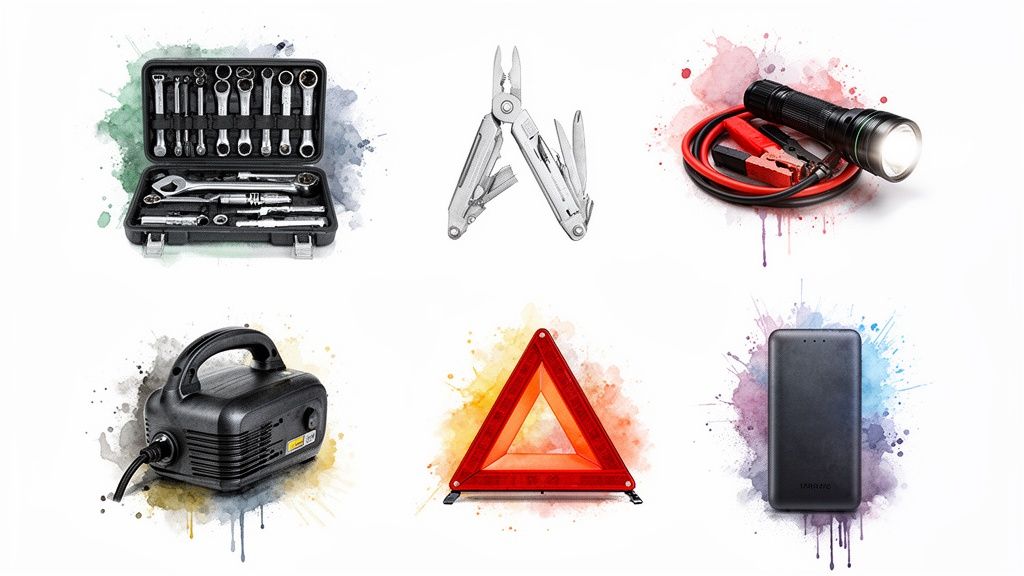
Let's get straight to the heart of it: your car emergency kit essentials. This isn't about packing for every doomsday scenario. It’s about creating a practical, first-response toolkit that handles the most common roadside issues.
Your foundational kit is your safety net, built around three core pillars: fixing your car, keeping yourself safe, and staying connected. The goal isn't to turn you into a roadside mechanic. It's to give you the tools to manage a dead battery on a freezing morning or a flat tire on a deserted road until professional help arrives—if you even end up needing it.
The Core Car Emergency Kit Checklist
To make this simple, here is a clear checklist of the absolute must-haves. These are the items that will get you out of the most common jams.
| Category | Essential Item | Primary Use Case |
|---|---|---|
| Vehicle Repair | Jumper Cables or Portable Jump Starter | Bringing a dead battery back to life. A portable starter lets you do it without needing another vehicle. |
| Vehicle Repair | Tire Inflator and Sealant | Re-inflating a low tire to get to a shop or using sealant for a temporary fix on a small puncture. |
| Vehicle Repair | Basic Tool Kit (Multi-tool, Pliers) | Handling minor fixes like tightening a battery terminal, securing loose parts, or other unexpected small jobs. |
| Personal Safety | Reflective Triangles or LED Flares | Warning other drivers that your vehicle is stopped ahead, especially at night or in bad weather. |
| Personal Safety | High-Lumen Flashlight or Headlamp | Seeing what you're doing in the dark and making yourself visible. A headlamp frees up your hands. |
| Personal Safety | High-Visibility Vest | Making you instantly visible to other motorists if you have to get out of your car on the roadside. |
| Communication & Power | Fully Charged Power Bank | Ensuring your phone has power to call for help, even if your car's battery is dead. |
This table covers your bases. Having these items means you're prepared for the vast majority of roadside issues you're likely to encounter.
Essential Gear for Vehicle Fixes
When your car stops cooperating, a few key pieces of gear make the difference between a minor inconvenience and a major ordeal. While everyone thinks of jumper cables first, a well-rounded kit goes a bit further.
-
Jumper Cables or a Portable Jump Starter: A dead battery is the most common roadside problem. Classic jumper cables work if a good Samaritan is nearby, but a modern portable jump starter is a game-changer, letting you get going on your own in minutes.
-
Tire Inflator and Sealant: A low tire doesn't have to mean you're stranded. A portable air compressor can top off the tire, buying you time to get to a repair shop. For extra peace of mind, a can of tire sealant can plug a small puncture on the spot. I’ve found a great, easy-to-use smart car tire inflator that takes all the guesswork out of the process.
-
Basic Tool Kit: You don't need a professional mechanic's toolbox. A simple kit with pliers, an adjustable wrench, a multi-bit screwdriver, and zip ties can solve a surprising number of problems—from re-tightening a loose battery connection to securing a piece of trim that’s flapping in the wind. A good multi-tool is a fantastic, compact addition.
Tools for Personal Safety and Visibility
Once you're on the side of the road, your personal safety becomes priority number one, especially at night or in bad weather. The biggest risk is not being seen by other drivers.
Actionable Insight: A breakdown on a busy road at night is an incredibly vulnerable situation. According to the National Highway Traffic Safety Administration (NHTSA), pedestrian fatalities are three times more likely to happen at night. Your only job in that moment is to make sure you and your vehicle are impossible to miss.
To do that, your kit must include:
- Reflective Warning Triangles or LED Flares: These are non-negotiable. Place them 50 to 100 feet behind your car to give oncoming traffic ample warning.
- High-Lumen Flashlight with Extra Batteries: A powerful flashlight is your best friend for inspecting your car and signaling for help. A headlamp is even better because it leaves both your hands free to work.
- High-Visibility Vest: Keep a reflective vest in your glove box or door pocket. If you have to step out of your car, putting it on makes you instantly more visible.
These simple items create a buffer zone around your vehicle, giving you the security to figure out your next steps without putting yourself in harm's way.
Must-Haves for Communication and Power
In any emergency, your phone is your lifeline. It's how you call for help, check your location, and let family know you're okay. But it's useless if the battery is dead.
That's why a dedicated power bank is a critical piece of any modern emergency kit. You can't rely on your car's charger—an electrical fault or a dead battery renders it useless. Keep a fully charged power bank and the right cable in your kit at all times. It's simple tech that ensures you're never cut off when you need help most.
First Aid and Survival Items You Shouldn't Ignore
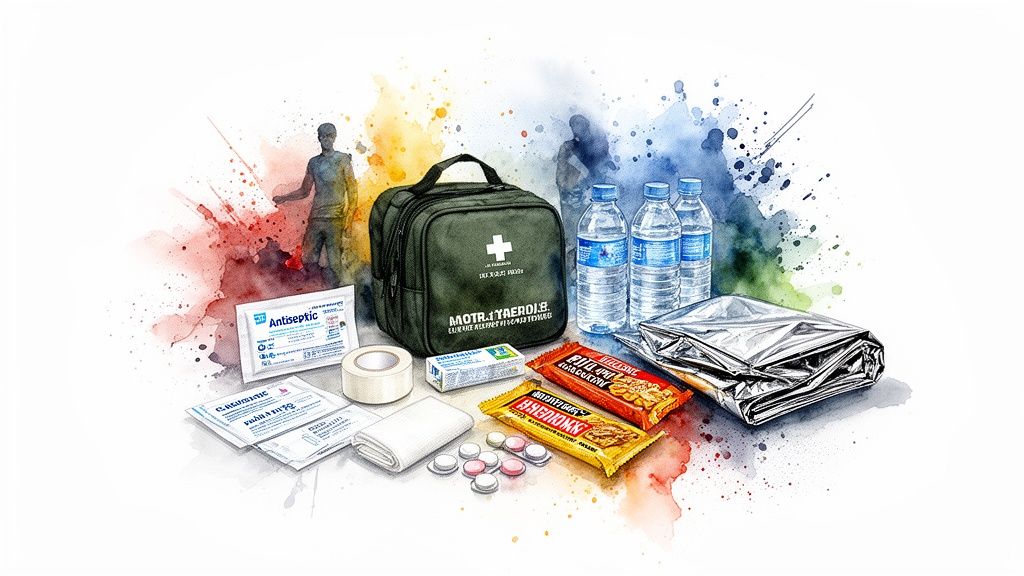
We've covered the tools to get your car running, but what about you? A dead battery is one thing, but if you're stranded for hours or dealing with an injury, the situation gets serious fast. This is where your focus shifts from fixing the vehicle to caring for yourself and your passengers.
Your car emergency kit essentials must go beyond wrenches and jumper cables. Think about what you'd need to stay safe, warm, and healthy until help arrives. It’s not just about a few bandages; it's about having the right gear to make a long, stressful wait manageable.
Assemble a First Aid Kit That Matters
It's easy to get a cut or scrape while working on a car. A minor injury can become a real problem without the right supplies. While a pre-packaged first aid kit is a good start, you should open it and enhance it with quality items you trust.
It's a strange statistic, but while most drivers know they need a first aid kit, only about 30% feel theirs is stocked well enough for a real emergency. With around six million car accidents happening each year in the U.S., the ability to clean a wound or stop bleeding on the spot is crucial. The National Safety Council recommends key items like nonlatex gloves, antibiotic ointment, and an instant cold compress—things often missing from cheap, basic kits. You can dig deeper into essentials for your emergency kit on UTires.com.
Here's an actionable checklist for a solid, personalized first aid kit:
- Assorted Bandages and Gauze Pads: Get a variety of sizes for different cuts and scrapes.
- Antiseptic Wipes and Antibiotic Ointment: The first step to preventing infection is cleaning the wound properly.
- Adhesive Medical Tape: Essential for holding gauze in place or even fashioning a makeshift splint.
- Pain Relievers: Ibuprofen or acetaminophen can make a huge difference when you're dealing with a headache or minor pain.
- Instant Cold Compress: Use this to reduce swelling from a bump or a sprain.
- Nonlatex Gloves: Always wear these before helping someone else to protect both of you.
Survival Basics for Comfort and Endurance
Beyond immediate medical care, think about endurance. Are you ready to wait for hours in a summer traffic jam or on a freezing winter night? Your body needs fuel, water, and protection from the weather.
Actionable Insight: Your body loses heat up to 25 times faster when you're wet. An emergency blanket isn't just for sub-zero temperatures; it's a vital tool to prevent hypothermia anytime it's cool and damp.
These items don't take up much space, but they provide a massive boost in comfort and security when you're feeling vulnerable on the side of the road.
Must-Have Sustenance and Shelter Items
Your goal here is to pack items with a long shelf life that can handle the temperature swings inside a car trunk. You want to keep your energy up and your body temperature stable.
- Water Bottles: Dehydration is a serious risk that can impair your ability to think clearly. Pack at least one liter of water for every person you usually travel with.
- Non-Perishable, High-Energy Snacks: Forget anything that can melt or spoil. Pack protein bars, mixed nuts, or dried fruit. They deliver a quick energy boost and are great for keeping kids (and adults) from getting stressed.
- Mylar Emergency Blanket: This might be one of the most important items in your kit. These compact blankets reflect up to 90% of your body heat back at you, making them a genuine lifesaver in the cold.
When you pack these items, your kit becomes a personal safety system that ensures you’re ready to stay warm, hydrated, and capable of handling whatever the situation throws at you.
Fine-Tuning Your Kit for the Road Ahead
A one-size-fits-all emergency kit is better than nothing, but it’s far from ideal. The car emergency kit essentials for a city commuter are a world away from what a family needs for a cross-country trip. The real magic happens when you tailor your kit to your life, your climate, and your trips.
This isn't just about ticking boxes; it's about building a practical safety net. A few smart swaps for the season or a specific journey can transform your kit from dead weight in the trunk into a genuine lifesaver.
Gear Up for Winter's Worst
When the temperature plummets, getting stranded in the cold can turn from an inconvenience to a serious danger. Your focus should be on three things: traction, visibility, and staying warm.
Here’s what to add to your kit once the first frost hits:
- Ice Scraper & Snow Brush: A non-negotiable. You can't drive safely if you can't see.
- Compact Shovel: A small, collapsible shovel is invaluable for digging your tires out of a snowbank.
- Traction Aid: Keep a bag of cat litter in your trunk—it works wonders for getting a grip on ice. You can also buy dedicated traction mats.
- Warmth Essentials: Pack an extra pair of gloves, a warm hat, and a wool blanket. If your car won't start, you’ll lose heat fast.
- Winter-Grade Washer Fluid: Top off your reservoir with fluid rated for low temperatures to prevent it from freezing on your windshield while driving.
Beat the Summer Heat
Summer road trips come with their own challenges, usually revolving around heat. An overheating car or passengers is a major concern. For warm weather, shift your kit's focus to hydration, sun protection, and keeping cool.
As the weather heats up, make sure to pack these items:
- Extra Water: Double what you'd normally carry. Dehydration sets in fast inside a hot, stagnant car.
- Sunscreen & a Wide-Brimmed Hat: If you have to get out of your car on the side of a highway, you’ll be glad you have sun protection.
- Portable, Battery-Powered Fan: A small fan can make a huge difference in a stuffy car, especially if your A/C dies.
- Coolant: A spare jug of coolant can be the difference between a quick top-off and a tow truck call if your engine starts to overheat.
A dead car battery is a year-round hassle, but a dead phone battery on a remote trip is a modern crisis. A solid power source is a must for any journey. To find a reliable one, check out our guide on the best portable chargers for travel.
Customize for Your Specific Journey
Beyond the seasons, think about the trip itself. Where are you going? Who is coming with you? Your kit should reflect those answers.
Heading out to a remote area with spotty cell service? A satellite messenger is a wise investment. Traveling with kids? Pack extra snacks, small games, and any specific medications to keep things from spiraling.
And don't forget your pets. If your pet is coming along, your kit needs their essentials, too:
- A leash and a collar with current ID tags.
- A collapsible water bowl and a bottle of water just for them.
- A small bag of their food.
- Any medications they require.
Making these simple tweaks ensures your kit is a personalized safety tool, ready for whatever your unique adventures throw your way.
How to Pack and Maintain Your Emergency Kit
Having the right gear is one thing, but being able to find it in a hurry is what really counts. A jumbled mess of supplies in the back of your car just adds stress. Proper packing and routine maintenance are what turn a pile of stuff into a lifesaver.
First, get a dedicated container. A heavy-duty duffel bag, a clear plastic tote, or a modular pack with dividers works wonders. The goal is to keep your gear contained, protected, and from rolling around every time you take a turn.
Strategic Organization for Quick Access
When you pack your kit, think like a first responder: what do you need right now? Your most critical items must be on top. The last thing you want is to be fumbling for a flashlight under tangled jumper cables on a dark road.
Use a simple layering method:
- Top Layer (Immediate Safety): This is for grab-and-go gear. Pack your flashlight or headlamp, a reflective safety vest, and the first-aid kit.
- Middle Layer (Problem Solvers): Here's where your fix-it tools live. Store your jumper cables or portable jump starter, tire inflator, and basic tool kit.
- Bottom Layer (Sustainment Gear): These are the "just in case" items. Place water bottles, non-perishable snacks, and Mylar emergency blankets here.
This tiered system lets you react to the most urgent problems without dumping the entire kit on the ground. Beyond the kit itself, it's also worth exploring how other smart car accessories can make your daily drive safer and more convenient.
Actionable Insight: The goal is to create a system where muscle memory takes over in a high-stress moment. Knowing exactly where your flashlight is removes one more variable from an unpredictable situation.
The Biannual Maintenance Habit
A "set it and forget it" approach doesn't work for an emergency kit. Supplies expire, batteries die, and seasons change. You must check it twice a year to ensure everything is ready.
The easiest way to remember is to tie it to daylight saving time. When the clocks change in the spring and fall, it's time to check the kit.
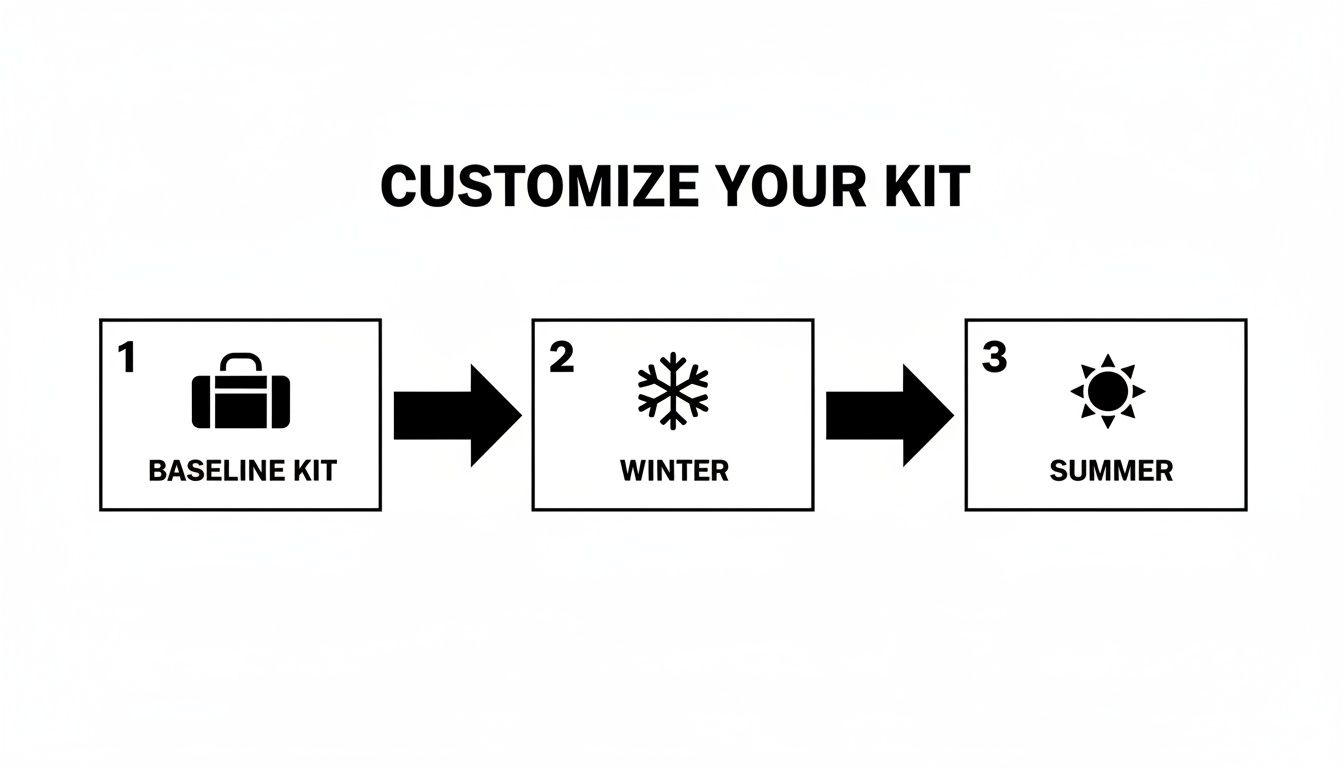
This chart visualizes the process. You start with a solid baseline kit, and then swap out a few key items for winter and summer. It's not a complete overhaul, just a smart adjustment.
Here’s my simple checklist for every maintenance run:
- Check Expiration Dates: Look at food, water, and first-aid supplies. Toss and replace anything that's past its prime.
- Test Electronics: Turn on the flashlight. Check the charge on your power bank. Pop in a fresh set of batteries if needed.
- Inspect Tools: Give everything a once-over to ensure tools are clean, dry, and free of rust.
- Do the Seasonal Swap: In the fall, bring in winter gear—ice scraper, snow brush, and traction aid. In the spring, swap those out for extra water and sunscreen.
This small effort, just a few minutes twice a year, turns readiness into a simple, sustainable habit and ensures your kit will work when you need it most.
Answering Your Top Questions About Car Emergency Kits
Even after you've got a solid plan, a few questions always seem to pop up. Let's tackle the most common ones so you can finish building your kit with total confidence.
Should I Buy a Pre-Made Kit or Build My Own?
The honest answer is: a little bit of both.
Starting with a pre-made kit is a great shortcut. It gets the basics in your car fast, which is better than having nothing. The problem is, these kits often skimp on quality to keep costs down. The jumper cables might be flimsy, or the first-aid supplies might be sparse.
Actionable Insight: Buy a decent pre-made kit as your base. Then, immediately open it up and upgrade key components. Swap out the generic multi-tool for a better one, enhance the first-aid supplies, and add the specific seasonal gear we discussed. This hybrid approach gives you convenience without sacrificing quality.
Where’s the Best Place to Store My Kit in the Car?
Most of your gear should live in the trunk. Pack everything into a sturdy duffel bag or a plastic tote with a lid to keep it organized and prevent items from flying around.
However, a few critical items need to be within arm's reach.
Keep these in your glove compartment or center console:
- A multi-tool with a seatbelt cutter and window breaker
- A small, powerful flashlight
- A fully charged power bank just for your phone
Think of it this way: if you're trapped or it's pitch black outside, what do you need right now? Keep those items in the cabin.
How Often Should I Check and Update My Kit?
Treat it like a smoke detector—it’s no good if the batteries are dead. Check your kit every six months. A great way to remember is to tie it to daylight saving time in the spring and fall. When you change your clocks, check your kit.
During your check-up, look for anything that's expired, like food, water, or medications. Test your flashlight and power bank to make sure they still hold a charge, and replace any old batteries. This is also the perfect time to swap out your seasonal gear—pack away the ice scraper in the spring and bring it back out in the fall.
For all the innovative accessories that make life on the go safer and easier, explore the curated collection at JonkeyCart. Find practical solutions like our smart tire inflators and much more at https://jonkeycart.com.


Leave a comment